
Aidan Huang
Doctorante
Publications
Featured Publications
Full Publications
Full list of my publication can be found
here
.
36.
Flexible Proton-Conducting Biocomposites Based on Amino Acid Biomolecules.
Nano Lett.
2025
25, 26
10395–10401
35.
Instantaneous Piezoelectric Nanogenerator for Pacemaker Applications.
Nano Energy
2025
138
110828
34.
Inhibitory Effects on Smooth Muscle Cell Adhesion and Proliferation due to Oscillating Electric Fields by Nanogenerators.
Nanoscale
2025
17 (12)
7244-7252
33.
Advanced Energy Harvesting from Low-Frequency Ocean Waves for Lithium-Ion Battery Applications.
Energy Environ. Sci.
2025
18 (10)
4821-4832
30.
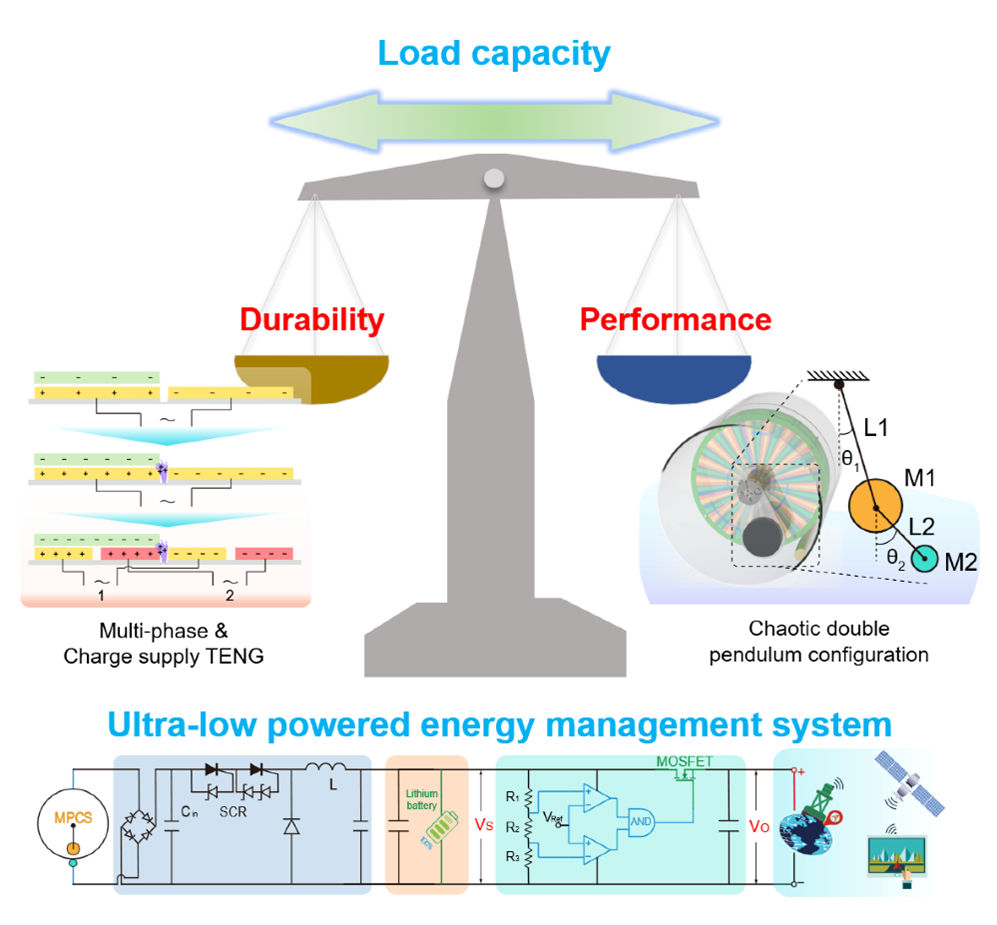
Durable Roller-Based Swing-Structured Triboelectric Nanogenerator for Water Wave Energy Harvesting.
Small
2024
20 (15)
2307288
29.
Achieving High Power Density and Durability of Multilayered Swing-Structured Triboelectric Nanogenerator Toward Marine Environmental Protection.
Adv. Funct. Mater.
2024
34 (6)
2311196
27.
Scalable Rolling-Structured Triboelectric Nanogenerator with High Power Density for Water Wave Energy Harvesting Toward Marine Environmental Monitoring.
Nano Res.
2023
16 (9)
11646-11652
26.
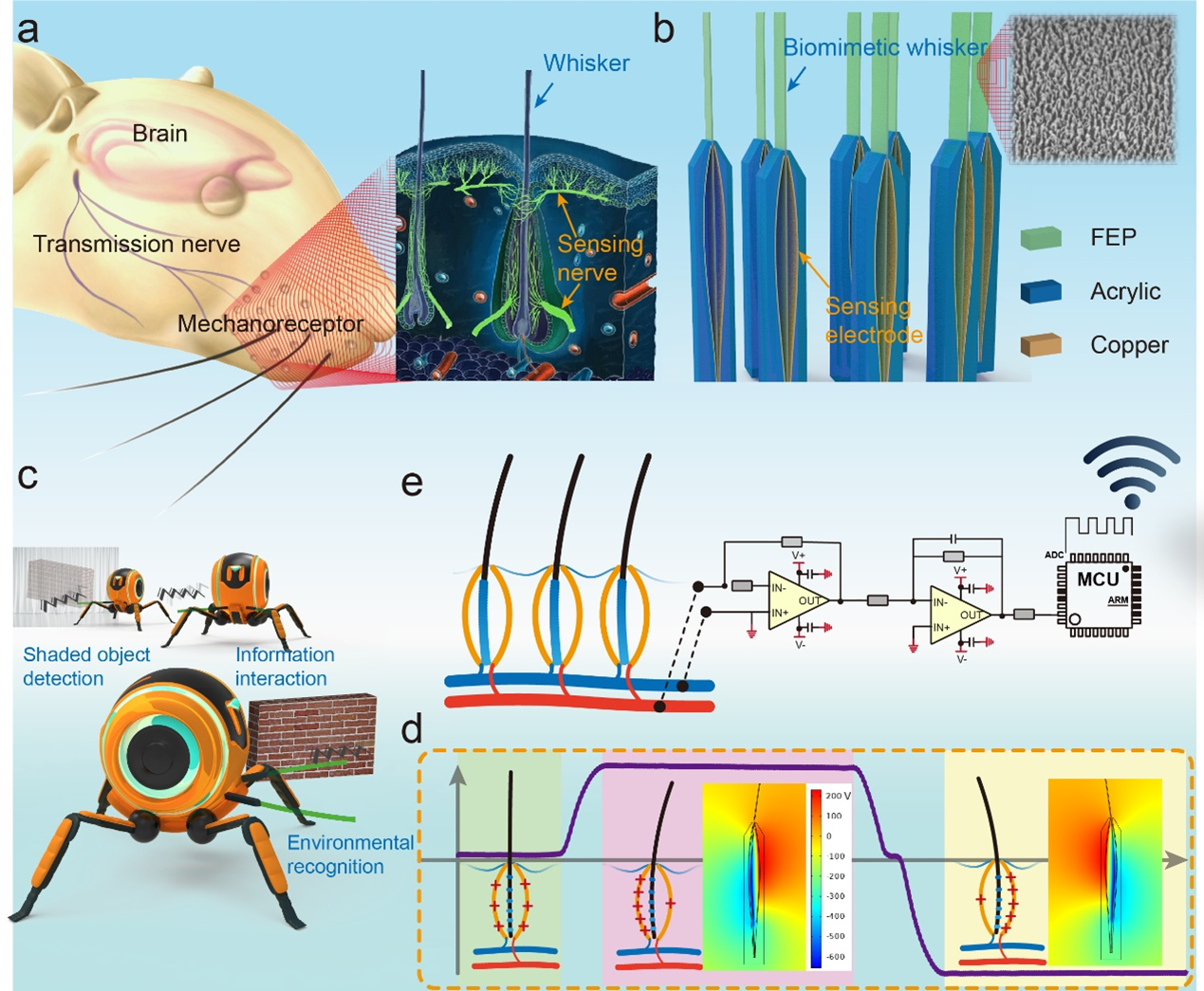
Machine-Learning Assisted Electronic Skins Capable of Proprioception and Exteroception in Soft Robotics.
Adv. Mater.
2023
35 (18)
2211385
25.
Multilayered Helical Spherical Triboelectric Nanogenerator with Charge Shuttling for Water Wave Energy Harvesting.
Small Methods
2023
7 (3)
2201392
24.
Highly Adaptive Triboelectric-Electromagnetic Hybrid Nanogenerator for Scavenging Flow Energy and Self-Powered Marine Wireless Sensing.
Adv. Mater. Technol.
2023
8 (4)
2201245
23.
A Strong, Biodegradable, and Recyclable All-Lignocellulose Fabricated Triboelectric Nanogenerator for Self-Powered Disposable Medical Monitoring.
J. Mater. Chem. A
2023
11 (22)
11730-11739
22.
Sustainable Long-Term and Wide-Area Environment Monitoring Network Based on Distributed Self-Powered Wireless Sensing Nodes.
Adv. Energy Mater.
2023
13 (2)
2202691
20.
Strong and Flame-Retardant Wood-Based Triboelectric Nanogenerators Toward Self-Powered Building Fire Protection.
Mater. Today Phys.
2022
27
100798
19.
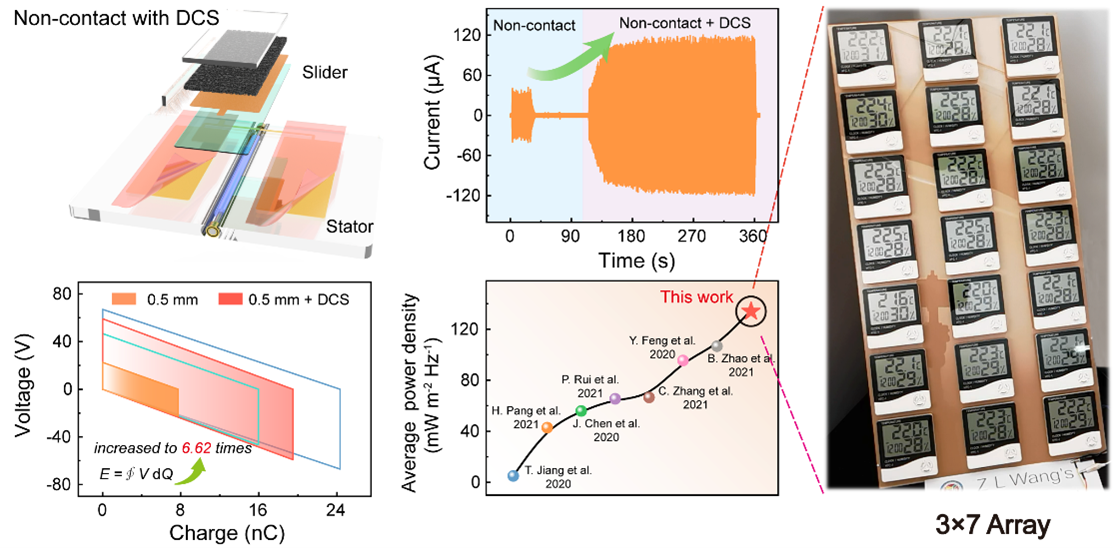
Achieving High Power Density and Durability of Sliding Mode Triboelectric Nanogenerator by Double Charge Supplement Strategy.
Adv. Energy Mater.
2022
12 (33)
2201813
18.
A Novel Flow Sensing and Controlling System Based on the Flapping Film Triboelectric Nanogenerator Toward Smart Factories.
Sens. Actuators A Phys.
2022
344
113727
17.
Durability Improvement of Breeze-Driven Triboelectric-Electromagnetic Hybrid Nanogenerator by a Travel-Controlled Approach.
Adv. Funct. Mater.
2022
32 (39)
2205710
15.
Enhanced Output of On-Body Direct-Current Power Textiles by Efficient Energy Management for Sustainable Working of Mobile Electronics.
Adv. Energy Mater.
2022
12 (29)
2201532
14.
Flexible Film-Discharge-Switch Assisted Universal Power Management System for the Four Operation Modes of Triboelectric Nanogenerators.
Adv. Energy Mater.
2022
12 (11)
2103677
13.
Methods for Correctly Characterizing the Output Performance of Nanogenerators.
Nano Energy
2022
93
106884
12.
A Stackable Triboelectric Nanogenerator for Wave-Driven Marine Buoys.
Nanomaterials
2022
12 (4)
594
11.
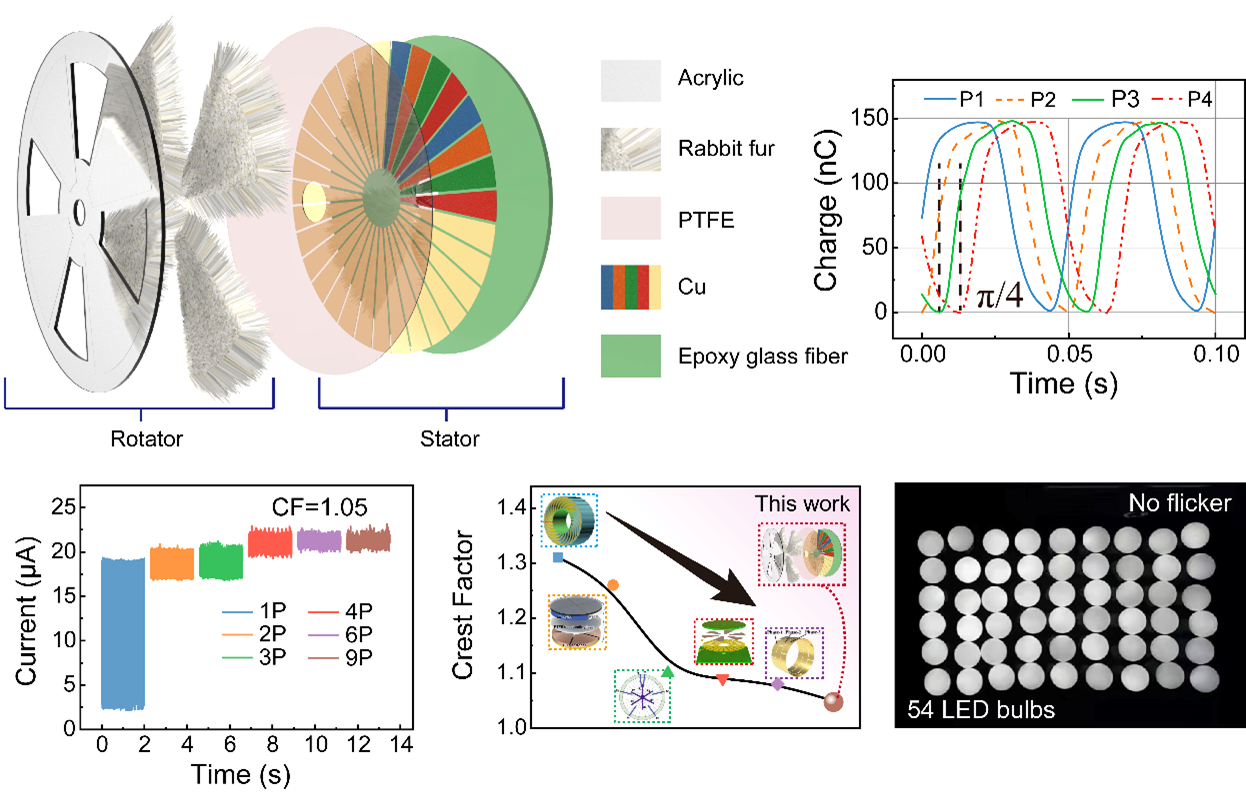
Wind-Driven Soft-Contact Rotary Triboelectric Nanogenerator Based on Rabbit Fur with High Performance and Durability for Smart Farming.
Adv. Funct. Mater.
2022
32 (2)
2108580
10.
Segmented Swing-Structured Fur-Based Triboelectric Nanogenerator for Harvesting Blue Energy Toward Marine Environmental Applications.
Adv. Funct. Mater.
2021
31 (47)
2106398
6.
Super-Durable, Low-Wear, and High-Performance Fur-Brush Triboelectric Nanogenerator for Wind and Water Energy Harvesting for Smart Agriculture.
Adv. Energy Mater.
2021
11 (9)
2003066
5.
High Output Direct-Current Power Fabrics Based on the Air Breakdown Effect.
Energy Environ. Sci.
2021
14 (4)
2460-2471
4.
Rationally Segmented Triboelectric Nanogenerator with a Constant Direct-Current Output and Low Crest Factor.
Energy Environ. Sci.
2021
14 (8)
4523-4532
2.
Flame-Retardant Textile-Based Triboelectric Nanogenerators for Fire Protection Applications.
ACS Nano
2020
14 (11)
15853-15863
1.
Honeycomb Structure Inspired Triboelectric Nanogenerator for Highly Effective Vibration Energy Harvesting and Self-Powered Engine Condition Monitoring.
Adv. Energy Mater.
2019
9 (40)
1902460